
Explore Small Modular Reactors for data centers
Small Modular Reactors (SMRs) offer a powerful. reliable and affordable solution to the power question affecting Data Centers.

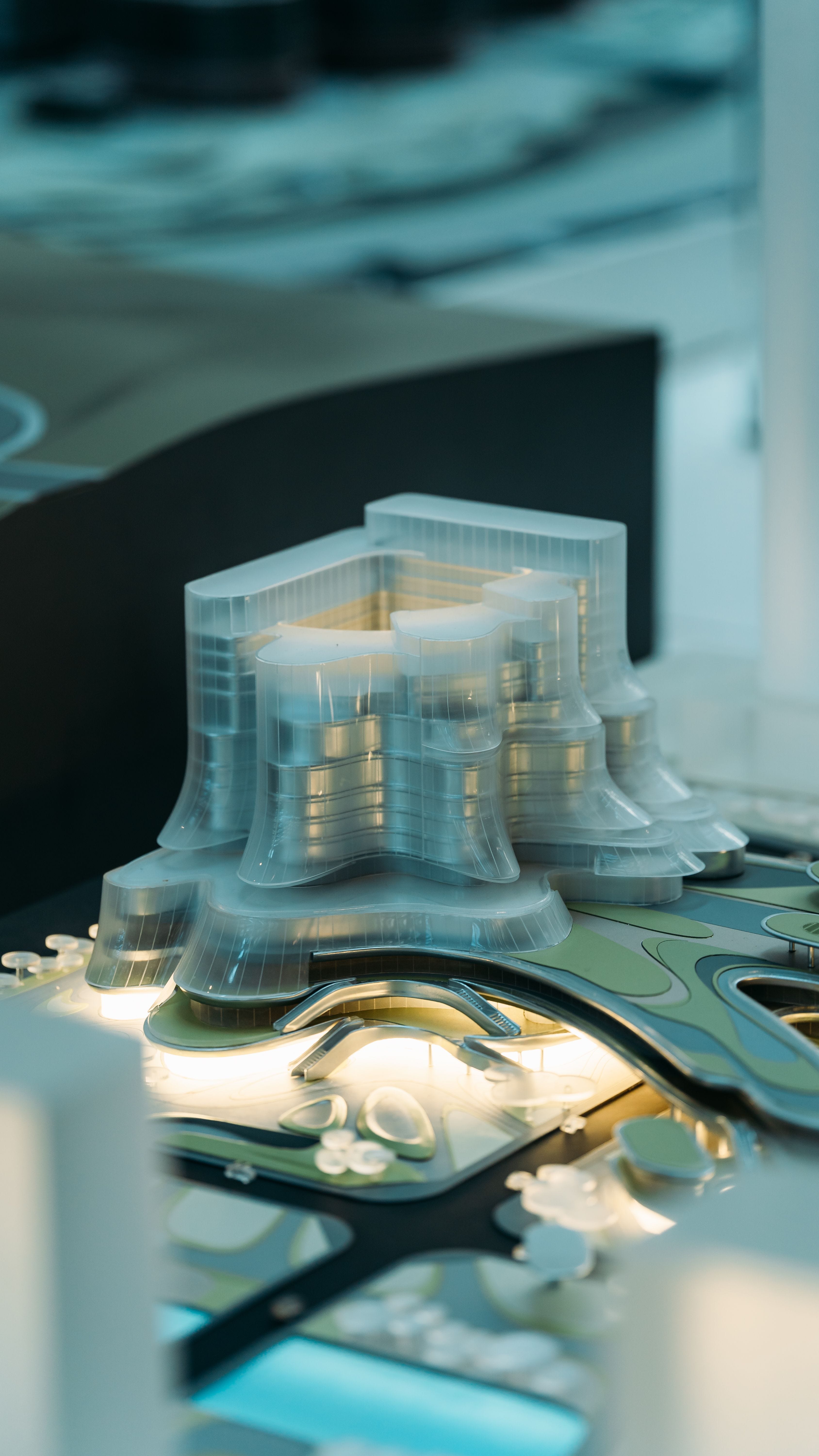
Small Modular Reactors (SMRs) are advanced nuclear reactors designed to be smaller (typically 10–300 MWe per module), factory-fabricated, and assembled on-site. They offer a promising solution for the massive, always-on power demands of AI-driven data centers, which require reliable, low-carbon, high-capacity-factor electricity.
Unlike traditional large nuclear plants (often 1 GW+), SMRs emphasize modularity, enhanced passive safety features, and scalability—making them well-suited for co-location with data centers or behind-the-meter setups. Why SMRs for Data Centers? Data centers (especially hyperscale AI facilities) need:
24/7 baseload power with minimal downtime.
Carbon-free energy to meet sustainability targets.
Scalable capacity that can match phased expansion.
Resilience against grid congestion or outages.
Key advantages of SMRs include:
High reliability — Capacity factors often exceed 90%, far above renewables without massive storage.
Scalability — Add modules incrementally; a single SMR can power a mid-sized facility, while fleets handle gigawatt-scale campuses.
Co-location potential — Compact footprint allows siting next to data centers, reducing transmission losses, improving security, and enabling waste-heat recovery (reactor heat could support cooling or other processes).
Low carbon and long-term stability — Carbon-free with predictable fuel costs over 40–60+ year lifespans.
Factory production — Aims for faster deployment and cost reductions via learning curves compared to custom large reactors.
Advanced safety — Many designs use passive cooling and innovative coolants/fuels (e.g., TRISO particles, molten salts) that reduce accident risks.
Some designs (such as microreactors rated at ~10–50 MW) target smaller or edge facilities, while larger SMRs suit hyperscale needs.
Major Deals and Players (as of mid-2026): Tech giants are heavily investing in SMRs to secure firm power for AI growth:
Google + Kairos Power: Master agreement for a 500 MW fleet of KP-FHR (molten fluoride salt-cooled) reactors. First unit targeted for ~2030; fleet by 2035. First corporate SMR PPA in the US.
Amazon + X-energy: Investment (~$500M+) and plans for up to 12 Xe-100 high-temperature gas-cooled (HTGR) reactors at the Cascade Advanced Energy Facility (up to 960 MW in phases, 2030s) in Washington state, in partnership with Energy Northwest.
Microsoft: Backing Aalo Atomics (sodium-cooled microreactors). Also a major PPA with Constellation for restarting Three Mile Island Unit 1 (835 MW, targeted 2027). Collaboration with Nvidia on AI for reactor fleet management/safety.
Meta: Multiple deals potentially totaling up to 6.6 GW, including with Oklo (Aurora fast reactor), TerraPower (Natrium sodium-cooled), and others.
Other activity: Last Energy planning 600 MW of microreactors for Texas data centers; Deep Atomic proposing integrated MK60 SMR + AI data center campus at Idaho National Laboratory (INL); NuScale (light-water SMR) with licensing and partnerships.
Many projects involve co-location or dedicated supply to data centers.
Recent Milestones (2026):Several US startups achieved major progress under the DOE’s Reactor Pilot Program:
Aalo Atomics reached criticality (self-sustaining chain reaction) on its Aalo-X test reactor (10 MWe design) at INL on July 4, 2026 — the same core components as its commercial Aalo Pod (50 MW sodium/air-cooled system, no external water needed). Plans include a co-located data center demo. Microsoft-backed.
Other startups (Antares, Valar, Deployable Energy) also hit criticality rapidly in mid-2026.
Test reactors and early demos are advancing quickly, with commercial deployments eyed for the early 2030s.
Technical Designs Suited to Data Centers
Molten salt reactors (e.g., Kairos KP-FHR): High-temperature operation, inherent safety, efficient for electricity + potential process heat.
High-temperature gas reactors (e.g., X-energy Xe-100): TRISO fuel for excellent safety; modular pebble-bed design.
Sodium-cooled fast reactors (e.g., Oklo Aurora, TerraPower Natrium, Aalo): High energy density, good for waste reduction in some designs.
Microreactors: Very compact, transportable; ideal for targeted or remote data center power.
General SMR concept illustration (showing core components):
Challenges and Considerations:
SMRs are not without hurdles:
Timelines: First commercial units likely early 2030s (demos sooner). Data center construction is faster, creating a mismatch.
Costs: First-of-a-kind projects are expensive; economies of scale expected later. Some analyses suggest renewables + storage or gas peakers can be cheaper/faster in certain scenarios.
Regulation: NRC licensing is rigorous (though DOE pilots are accelerating paths). Public acceptance and siting near data centers require careful community engagement.
Fuel supply: Some advanced designs require HALEU (high-assay low-enriched uranium), and supply chains are still maturing.
Waste and perception: Advanced designs aim to minimize waste, but nuclear faces ongoing scrutiny. However, the basic technology, nuclear fusion, produces little, if any, waste.
Economics: Requires long-term PPAs from creditworthy buyers, such as tech companies.
Co-location concept (data center integrated with nuclear power):
Outlook:
SMRs represent a strategic long-term play for data center power, driven by AI demand. They complement (rather than replace) costly and unreliable renewables by providing firm, dispatchable clean energy. With billions in investments, DOE support, and rapid test reactor progress in 2026, the sector is moving from concept to deployment. Expect more co-located projects, fleet deployments, and hybrid systems (SMRs + renewables/storage) in the 2030s. Success depends on cost reductions, regulatory streamlining, and supply chain maturation. For the latest, track companies like Kairos Power, X-energy, Aalo Atomics, Oklo, and announcements from Google, Amazon, Microsoft, and Meta. SMRs could help solve the “energy quadrilemma” of affordability, sustainability, reliability, and security for the digital future.
This would be great for data centers. The US, government, power companies and public need to come to terms with small nuclear reactors across the US and then upgrade and make redundancies in our power grid for stability and security.
Demand it so they don’t stress the current infrastructure.